For more than thirty years I've been wandering the woods and waterways of Saratoga County, New York, and regions nearby, looking closely, listening carefully, and recording what I experience. We are blessed in this region with an amazing amount of wilderness right at hand. With this blog I share my year-round adventures here, seeking out what wonders await in my own Madagascar close to home.
Showing posts with label bog plants. Show all posts
Tuesday, November 15, 2011
Paddling a Cranberry Bog
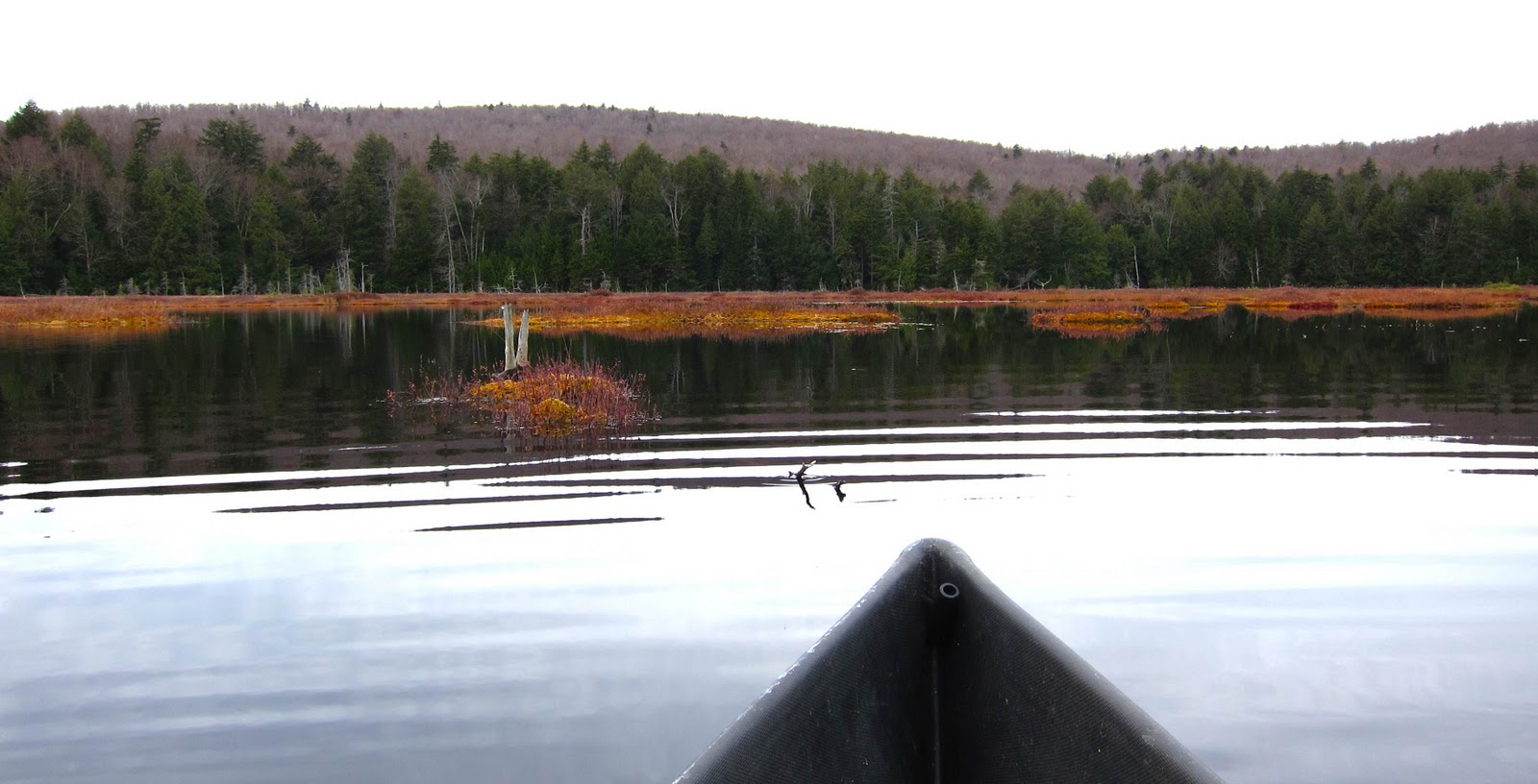
It's a good thing my canoe was still on my car. When Evelyn called to invite me to join her for cranberry hunting at Lens Lake today, all I had to do was hop in my car and head up north to this isolated boggy lake. Lying about 5 winding, climbing miles west of Stony Creek, Lens Lake has a convoluted shoreline made even more intricate by hundreds of acres of sphagnum mats, their golden moss carpets embroidered by the dark purplish leaves of thousands upon thousands of wild cranberry plants.
The colorful bog mats added a warm glow to an otherwise dark and chilly lake, as we skirted the mats in our search for elusive cranberries. Despite the obvious abundance of cranberry leaves everywhere, only a few of the mats had plants that were bearing fruit. When we found a fruiting patch, we pulled our canoes up onto the mats and climbed out to crouch in the soggy, spongy moss to gather the berries.
Sometimes, the small red fruits were hidden by the color of the sphagnum itself.
They were much easier to detect on mats where the sphagnum was golden.
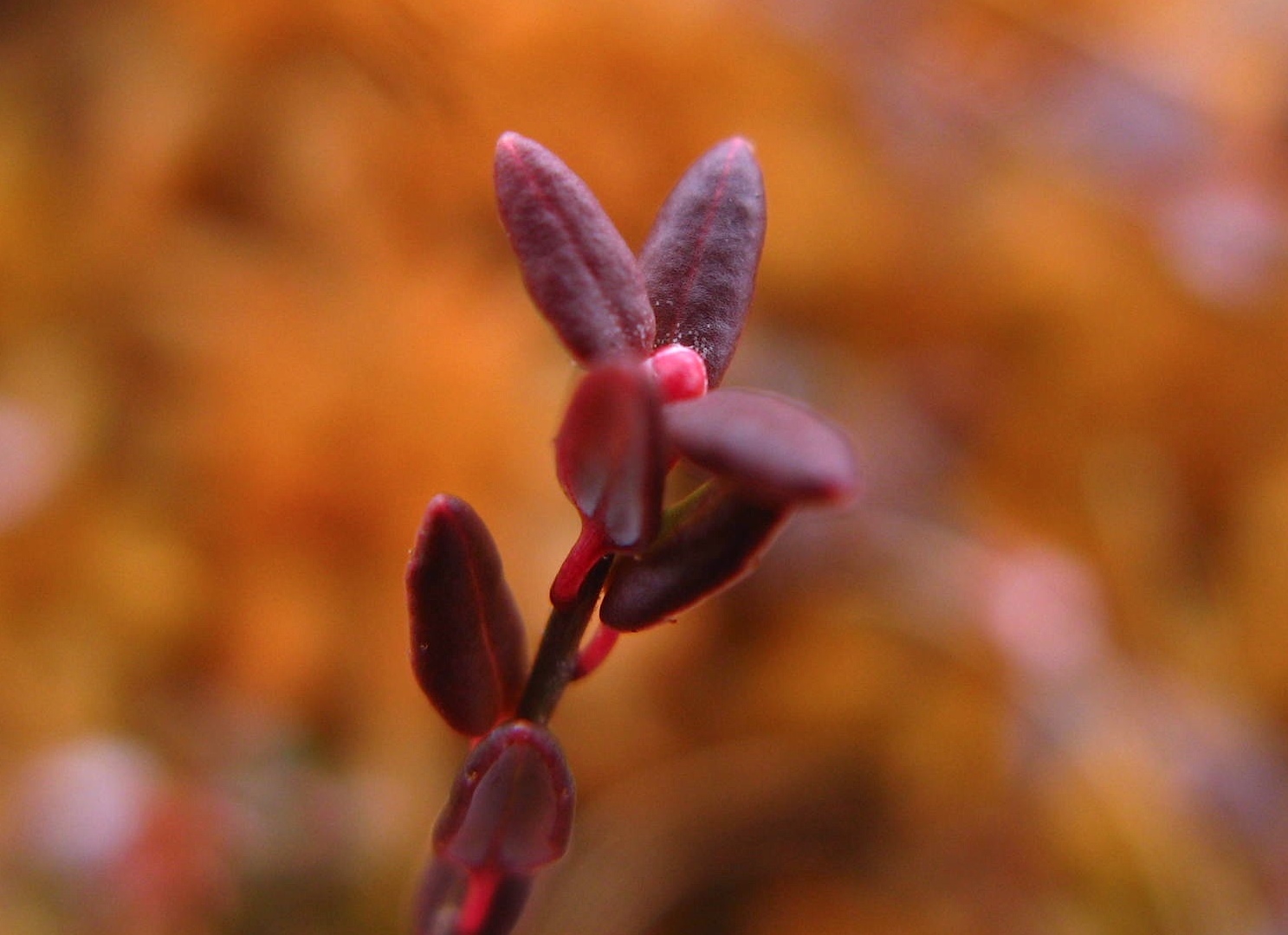
I was intrigued by the tiny red "buds" on the leaf stems of the cranberries. Could these be the buds of next summer's flowers? I just don't know.
Sometimes I would reach to pluck what I thought was a berry nestled down in the moss, only to discover that the round red ball was the tip of an emerging baby Pitcher Plant.
This little rotting stump was filigreed with pale green Bog Lycopodium and crowned with the spent seed pods of a thin-stalked plant I do not recognize.
Here's a closer view of those three-parted pods. Perhaps some reader will recognize them and tell us what they are.
These neat little heaps of what look like green corn kernels are actually the seeds of Arrow Arum, what's left of the fruits after the stems and leaves have rotted away..
All around us, fluffy heads of Cottongrass swayed in the wind.
Evelyn called my attention to this site where some creature had returned again and again to deposit its feces.
A closer look at the feces revealed that it was made up mostly of fish scales and bones and little bits of crayfish shells. The piles were too big to be those made by minks, so we surmised that we had come upon an otter's latrine.
And because we could be reasonably sure that this was otter poop, Evelyn felt pretty confident that this adjacent moss was the quite uncommon Pennsylvania Dung Moss (Splachnum pennsylvanicum), which grows only on the feces of otter and a few other creatures, as well as on some kinds of bones and animal cadavers.
I brought home a sample of the moss to show to a bryologist friend for confirmation, and I also was able to take a macro photo revealing the tiny starry growths at the tips of the fruiting bodies. Isn't this beautiful? And I would have walked right by it, if Evelyn had not pointed it out to me.
Now, not everybody I know would get all excited about finding otter poop. I count myself very lucky to have some friends who do, and who share their enthusiasm with me. Thanks, Evelyn, for a fun afternoon's adventure. And thanks, too, for sharing your cranberry harvest.
Saturday, November 12, 2011
Late Fall on the Fen
"Come on in! The water's fine!" And Sue was right, the water was fine for a paddle through the Glen Lake Fen today. Too cold for a swim, of course, but with high water filling channels now clear of frost-killed lily pads, we could paddle way, way back into the fen to parts we could not slog through in high summer.
Who knows how far we could have paddled, if we hadn't run into this beaver dam? Sure, we could have climbed out and hauled our boats over, but it was just too chilly this morning to risk a possible tumble into that cold, cold water. So we turned around here, deep into the fen in an area marked by a number of beaver lodges and many beaver-felled trees. Sue just couldn't stop remarking about what a great turtle habitat this will be, come summer.
I am more grateful than I can say to have a friend who knows how to amble slowly along a boggy shore, poking into the reeds, trying to identify the remnants of summer's flowers, stopping to photograph the odd anomalous aspect, and just generally reveling in the delights of a bright crisp day to glide along on a beautiful waterway before the ice closes in.
We explored the shore of a Tamarack-studded island, noting the presence of such bog-loving plants as this Bog Rosemary, distinctively purple against the brown-grass background.
We found just one Pitcher Plant, ruby-red in that cold blue water, its single flower still erect and intact.
It was Sue who noticed a whole bank of Bunchberry plants, their leaves the most radiant shades of pinky-purple against a carpet of moss and lichens.
Judging from all the rose hips along the banks, the air must surely have been filled with fragrance in summer.
The remains of Canada Lilies stood out, with their stout pods split open to reveal neatly stacked layers of dark red seeds. (On second thought, these could be the pods of Blue Flag instead.)
Smooth Sumac is now in its glory, its crimson berry clusters held high against the dun background. What lovely Christmas decorations they would make, adorning sprays of evergreens! I wonder how long they keep that gorgeous color. Do they darken with winter's freeze?
For part of our journey today, we were accompanied by a soaring Osprey, who wheeled overhead, then flapped away, only to return shortly to settle into a tree and observe our approach. I sure wish I had a telephoto lens. I can make out that Osprey at the very center of this photo, only because I know he is there. Of course, he flew away again as we drew abreast. A breathtaking sight!
Wednesday, November 2, 2011
The Bog in Autumn
November 2, All Soul's Day, the Day of the Dead. But it wasn't at all a dismal day, what with the brilliant sunshine and bright blue sky, a frosty morning with the promise of warmth to come. We couldn't have had a nicer day, Sue and I, to revisit our favorite bog near Lake George, to see how the typical bog plants there were changing with autumn's chill. So we pulled on our rubber bog-trompers, pushed through a hedge, and headed out across the sphagnum mat, surrounded on all sides by plants of spectacular color.
I don't think I've ever seen Winterberry so abundant or so vividly colored.
The Tamaracks' golden glow was intensified in early morning sun.
Just looking at all that gorgeous color brought big smiles to our faces. I would say that Sue looks very happy to be here.
The fluffy tufts of Cottongrass looked as if they were floating above the bog mat as they swayed and bobbed on their slender stems.
The predominant plant of this particular bog is Leatherleaf, which, this time of year, carpets the ground with colors like stained glass.
Blueberry leaves with the sun behind them resembled tongues of flame.
One leaf in particular caught the sunlight and glowed like a Christmas light.
Down close to the sphagnum mat, ripe cranberries dangled like tiny Japanese lanterns.
Where sunshine had not yet reached the ground, ruby-red sphagnum was sparkling with frosty ice crystals, as was this little brown leaf, edged with rime.
Although frozen solid, this pretty pink mushroom retained its distinctive color.
An orange jelly fungus had found a home in an old sawn log now covered with moss and lichens.
The Tamaracks and Black Spruces of the bog were veritable lichen farms, their branches festooned with beard lichens, mostly, but Sue found this one carnation-like clump of ruffly lichen, its pale green "petals" outlined with a darker hue. Very pretty.
This Bartonia was quite a surprise find, a tiny plant hiding out in the grass. Not very common to begin with, it's a miracle we ever saw it. Although dried out now and gone to seed, it actually looks pretty much the same as when it was newly in bloom with minute yellow flowers that barely emerge from its sepals. The five-angled stem is what clinched the ID.
After walking about the bog for an hour or so, sinking up to our ankles at times in the ice-crystalled moss, our rubber-booted feet began to feel too cold for comfort. So we headed back to our car, changed into our shoes, and stopped off for a walk at nearby Lake George.
Its surface unmarred by the roaring speedboats of summer, the lake today was as lovely and serene as a lake could be, dotted with islands and surrounded by mountains that merged with the blue of the sky.
Walking along the beach, we were enjoying the ripples of golden light cast on the sandy bottom, when we stopped to puzzle over this anomalous commotion in the water. After watching its upwelling motion for a while, we decided it must be a spring.
Here's an apt image to mark the Day of the Dead. In a nearby park, we found an abundant patch of Partridgeberry with its glossy red fruits and dainty evergreen leaves. As I knelt to take this photo, I was surprised to find the dried remains of several millipedes curled among the leaves.
Even more surprising was finding this sprightly Dandelion. In fact, we saw a good number of these sunny yellow blooms starring the green grass of a lawn. Considered a quintessential spring flower, the Dandelion will often bloom again in autumn, when the length of the day equals that of early spring. As winter's dark and cold begin to descend, it's nice to have this little reminder that spring will again return.
I don't think I've ever seen Winterberry so abundant or so vividly colored.
The Tamaracks' golden glow was intensified in early morning sun.
Just looking at all that gorgeous color brought big smiles to our faces. I would say that Sue looks very happy to be here.
The fluffy tufts of Cottongrass looked as if they were floating above the bog mat as they swayed and bobbed on their slender stems.
The predominant plant of this particular bog is Leatherleaf, which, this time of year, carpets the ground with colors like stained glass.
Blueberry leaves with the sun behind them resembled tongues of flame.
One leaf in particular caught the sunlight and glowed like a Christmas light.
Down close to the sphagnum mat, ripe cranberries dangled like tiny Japanese lanterns.
Where sunshine had not yet reached the ground, ruby-red sphagnum was sparkling with frosty ice crystals, as was this little brown leaf, edged with rime.
Although frozen solid, this pretty pink mushroom retained its distinctive color.
An orange jelly fungus had found a home in an old sawn log now covered with moss and lichens.
The Tamaracks and Black Spruces of the bog were veritable lichen farms, their branches festooned with beard lichens, mostly, but Sue found this one carnation-like clump of ruffly lichen, its pale green "petals" outlined with a darker hue. Very pretty.
This Bartonia was quite a surprise find, a tiny plant hiding out in the grass. Not very common to begin with, it's a miracle we ever saw it. Although dried out now and gone to seed, it actually looks pretty much the same as when it was newly in bloom with minute yellow flowers that barely emerge from its sepals. The five-angled stem is what clinched the ID.
After walking about the bog for an hour or so, sinking up to our ankles at times in the ice-crystalled moss, our rubber-booted feet began to feel too cold for comfort. So we headed back to our car, changed into our shoes, and stopped off for a walk at nearby Lake George.
Its surface unmarred by the roaring speedboats of summer, the lake today was as lovely and serene as a lake could be, dotted with islands and surrounded by mountains that merged with the blue of the sky.
Walking along the beach, we were enjoying the ripples of golden light cast on the sandy bottom, when we stopped to puzzle over this anomalous commotion in the water. After watching its upwelling motion for a while, we decided it must be a spring.
Here's an apt image to mark the Day of the Dead. In a nearby park, we found an abundant patch of Partridgeberry with its glossy red fruits and dainty evergreen leaves. As I knelt to take this photo, I was surprised to find the dried remains of several millipedes curled among the leaves.
Even more surprising was finding this sprightly Dandelion. In fact, we saw a good number of these sunny yellow blooms starring the green grass of a lawn. Considered a quintessential spring flower, the Dandelion will often bloom again in autumn, when the length of the day equals that of early spring. As winter's dark and cold begin to descend, it's nice to have this little reminder that spring will again return.
Sunday, July 10, 2011
Woods Walking, Bog Hopping
Saturday dawned clear and sunny, with no forecast for afternoon thunderstorms. What a treat: a whole day to spend outdoors, and with my good friend Sue, at that. Sue wanted to show me Cole's Woods in Glens Falls, a beautiful wooded area in the heart of the city, nestled between a major highway and a shopping mall that could have been a hundred miles away when we were following the shady trails along a pretty brook. During the winter, these trails are busy with whizzing cross-country skiers, but on a warm summer day, we had the whole woods to ourselves.

Multitudes of mushrooms of every shape and color were scattered across the forest floor.
These Velvet Earth Tongues, wee little things about an inch tall and black as coal, had found a home on an old rotting tree stump.
We emerged from the dark damp woods onto a high dry sandy area under the sky, where a large number of Dwarf Dandlions lifted their tiny yellow blossoms to the sun.
We'd come looking for Blunt-leaved Milkweed in that sunny area, and we did find some, mostly with flowers long spent. But we were totally surprised to find this Poke MIlkweed, still in bloom, with its distinctive molar-sized pale blossoms dangling down on drooping long stalks.
Dragonflies and damselflies were flitting everywhere, but only a couple stopped zooming long enough to get their picture taken. I believe this is a female Widow Skimmer, with the sunlight glinting off her lacy wings.
No photograph can ever do justice to the iridescent blue-green of the Ebony Jewelwing damselfly. Even when they do sit still long enough to get a good shot.
Whoa! I kept wondering what this odd-shaped insect was, as I saw it flying about here and there. Then it landed on this leaf so I could get a good gander at it. I'd seen Robber Flies before, but never one flying around with its prey tightly clutched between its legs. The fly is undoubtably sucking the juices out of that moth.
After a fun morning walking the woods, we next headed north to a bog near Lake George, eager to see if those white orchids I saw in bud last week might be blooming by now. It sure was a beautiful day to be wandering the bog, with a bright sun lighting up the reddened leaves of Highbush Blueberry bushes.
Sue was hoping to get some photos of the Calopogon orchids that were in full bloom last week.
Lucky for us, they were still blooming beautifully. Is this not one photogenic flower?
As we approached the area where I'd found the white orchids in bud last week, this spike of dazzling white announced its presence against its green background.
And there they were: sprouting up like dandelions, one of our showiest native orchids, the White Fringed Orchis, in full glorious bloom. We had to watch where we put our feet, they were so numerous.
Here's a closer look at one of those befringed florets.
Also newly in bloom was Cottongrass, and lots of it, poking fuzzy heads high above the bog mat.
With a hot sun burning our backs, we were glad to have the cold bog water oozing up around our feet, and also grateful to have whole handfuls of sweet juicy blueberries fall into our palms at a touch.
The dark red of this sphagnum moss shows off the yellow-green of a baby Tamarack beautifully.
After gazing in rapt delight at those spectacular orchids in the bog, why would I stop to pay the least attention to this ordinary old Smooth Sumac that was blooming near where we had parked our car? Well, because it was beautiful, too. That's why. And it also smelled delicious. I never realized that sumac flowers were fragrant.
Subscribe to:
Posts (Atom)


