Friday, October 7, 2022

Another Powerline, More Floral Bounty

My friend Sue Pierce had some exciting news: a poster to the internet app "iNaturalist" had pinpointed a large population of the spectacularly beautiful native wildflower called Fringed Gentian (Gentianopsis crinita), and this population was right here in our personal traipsing territory!  Of course, Sue and I would have been more circumspect in naming so exactly where to find such a "collectible" species, but we ourselves were quite delighted to have this information.  And of course, to act on it!

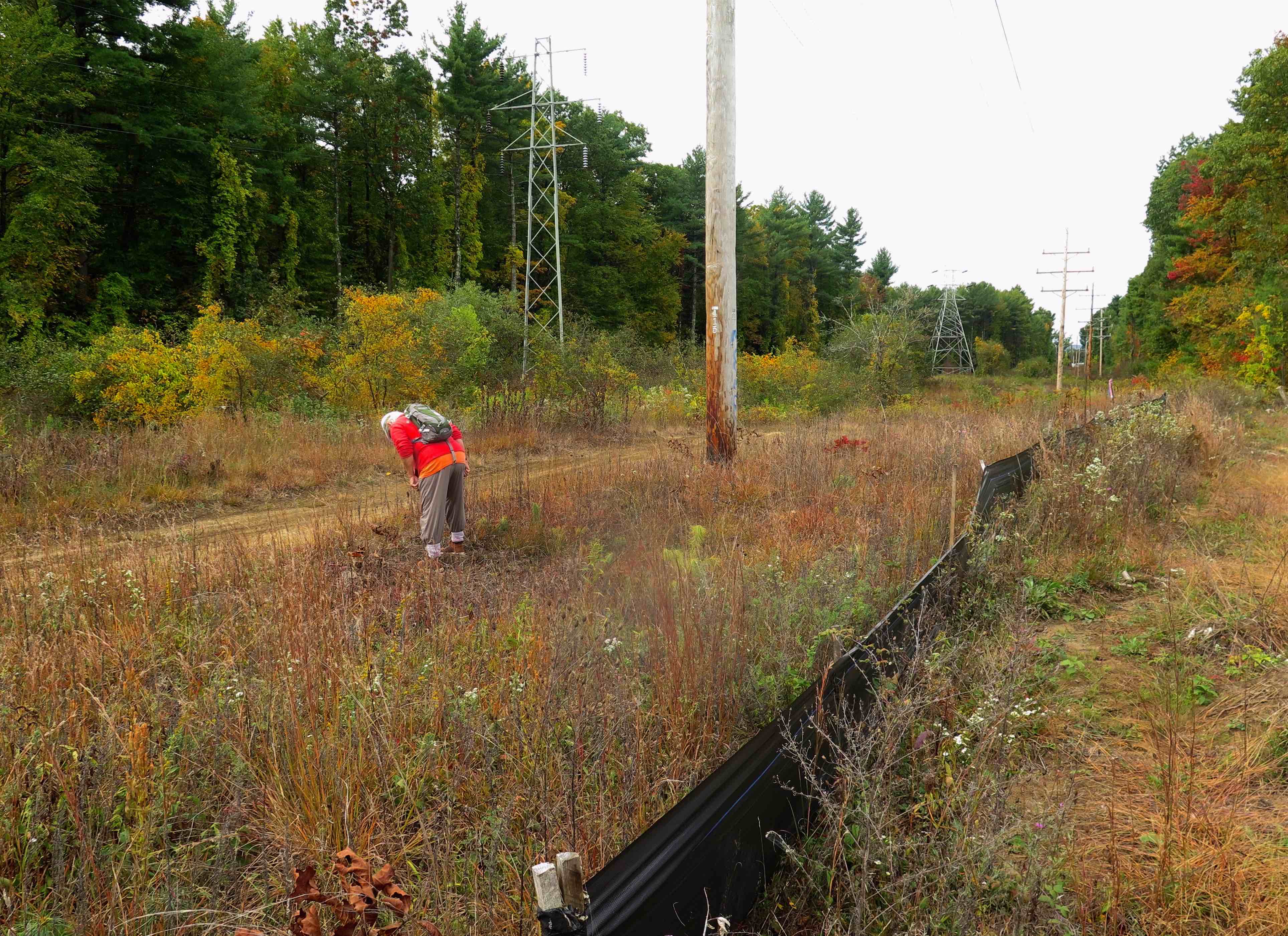
 So here we were one day this past week, exploring an unnamed powerline clearcut to see if we could find those Fringed Gentians -- or any other of the floral treasures we've come to expect we might find on these often overlooked wildflower habitats.   In many ways, these clearcuts replace the forest clearings that would naturally occur after fire or windstorms, and we have actually found some really rare or otherwise fascinating plants in other clearcuts we've explored.  What might we find today? Our hopes were high!


At first glance, this site didn't look very promising. As we entered, we saw huge mounds of what looked to be excavated "dirt" piled on a barren-looking weedy field.  But whoa! What are those bushy "blobs" sprouting up from the heaps of sand and rubble?


A closer look revealed them to be this most interesting plant, called Winged Pigweed (Cycloloma atriplicifolium),  a native of North America's central plains that has expanded its range by now to our northeastern states. Its favored habitat is exactly the kind of disturbed sandy soil where we found it growing today. Some of these bushy plants had aged to a somber gray-brown, but a few still sported their beautifully rosy-purple autumn coloration.


Here's a closer look at an individual winged floret, now forming its seed.  Each bushy plant is attached to the ground by a single stem, which eventually will break off to send the rest of the plant tumbling away in the wind, shedding its seeds as it rolls.


As we followed the powerline through more woodsy territory, we were delighted by the crazy-quilt autumn colors of the trailside vegetation.


The blazing star of this trailside vegetation was our native New England Aster (Symphyotrichum novae-angliae), with blooms of the most vivid purple.


Here, too, flourished many plants of New England Aster bearing vivid-rose blooms, looking especially beautiful in combination with their purple-flowered neighbors.


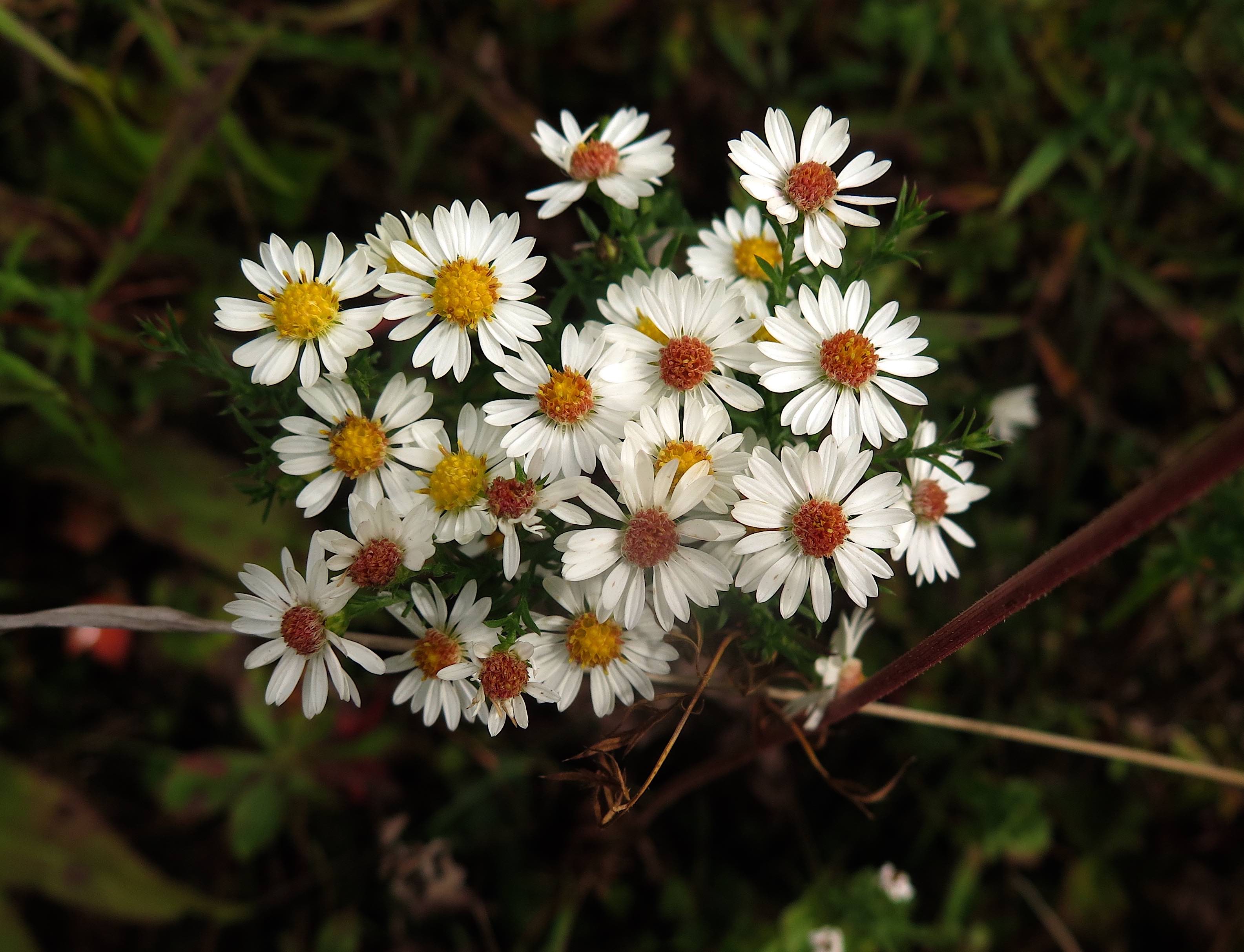
Many white-flowered asters crowded the trailside grasses, too.  They might all have been Heath Asters (Symphyotrichum ericoides), but I was not carrying my Newcomb's Wildflower Guide to help me key out the many similar species of small white asters.  Whatever their species, they were very pretty.


We were not surprised to find here many plants of Slender Agalinis (Agalinis tenuifolia), since open, sandy-soiled sites like this are its preferred habitat.  But we hadn't really expected to see so many still in bloom this late in the year.


Still searching for those Fringed Gentians we hoped to find, we enjoyed other trailside beauty as we walked, delighted to find Winterberry shrubs (Ilex verticillata) heavy with scarlet fruits.


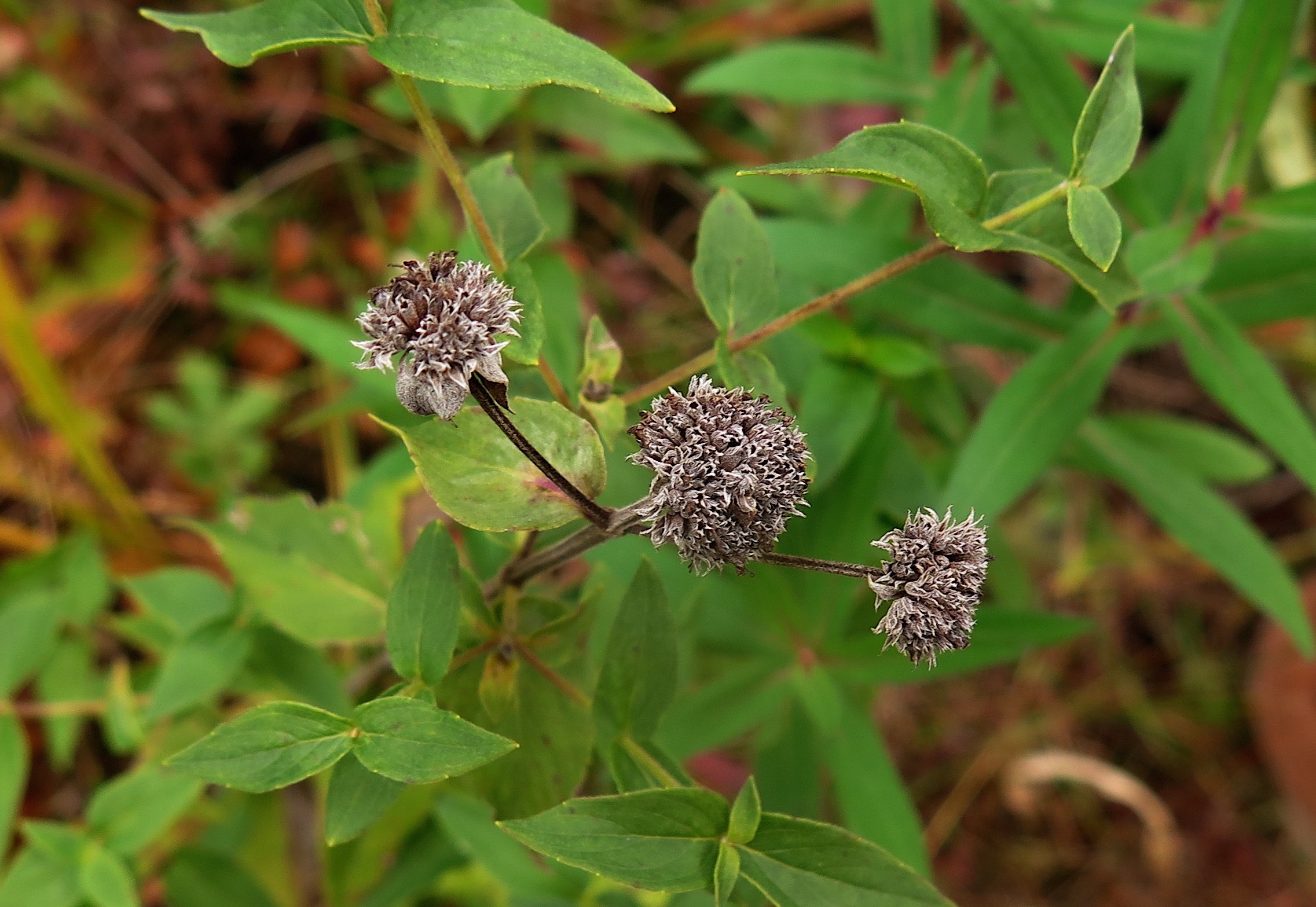
These gray seedheads of Mountain Mint (Pycnanthemum sp.) may not have been  colorful, but we were happy to find Mountain Mint growing abundantly here.  Their leaves were quite a bit broader than those of the more common Narrow-leaved Mountain Mint, which we find much more frequently than this species flourishing under this powerline. It is possible that this is the species called Short-toothed  Mountain Mint (Pycnanthemum muticum), which is rated as a Threatened species in New York State.


And finally, there they were!  The Fringed Gentians we were hoping to find!  Even though most of the many plants we encountered were somewhat past their prime, the radiant royal blue of the occasional still-open flowers blazed out from amid the overgrowing grasses, making them easy to discern.


Once we espied the first Fringed Gentian plant, we kept seeing more and more.  And more! And many stems bore multiple blooms like this one.  A true treasure-trove of Fringed Gentians! This site will obviously be on our list of sites to visit next September.


(At  this point, I do want to urge everyone to NEVER pick a Fringed Gentian.  This is a biennial species, depending on its flowers to produce and drop seed, which (conditions permitting) will germinate to produce non-flowering leafy plants the following year, which will eventually produce the flowering plants the second year after seed drop. Without the flowers left in place and allowed to produce seeds, the plants will disappear.)


In addition to exposure to sunlight, one of the habitat conditions that must be present to promote the growth of Fringed Gentians is the presence of dampness in the soil.  Dampness of soil is also a condition required by many species of liverwort. Here, Sue is photographing a liverwort (species unknown to us as yet) we were surprised to discover along the trail.  


I hope Sue's photo is better focused than mine.  But at least my photo shows certain details that might help a bryologist determine its species.  I suspect those small brown dots might be the fruiting bodies.  I'm not sure if the wispy green threads poking up through the liverwort's leaf cluster are part of the liverwort itself, or rather bits of moss occupying the same patch of soil.


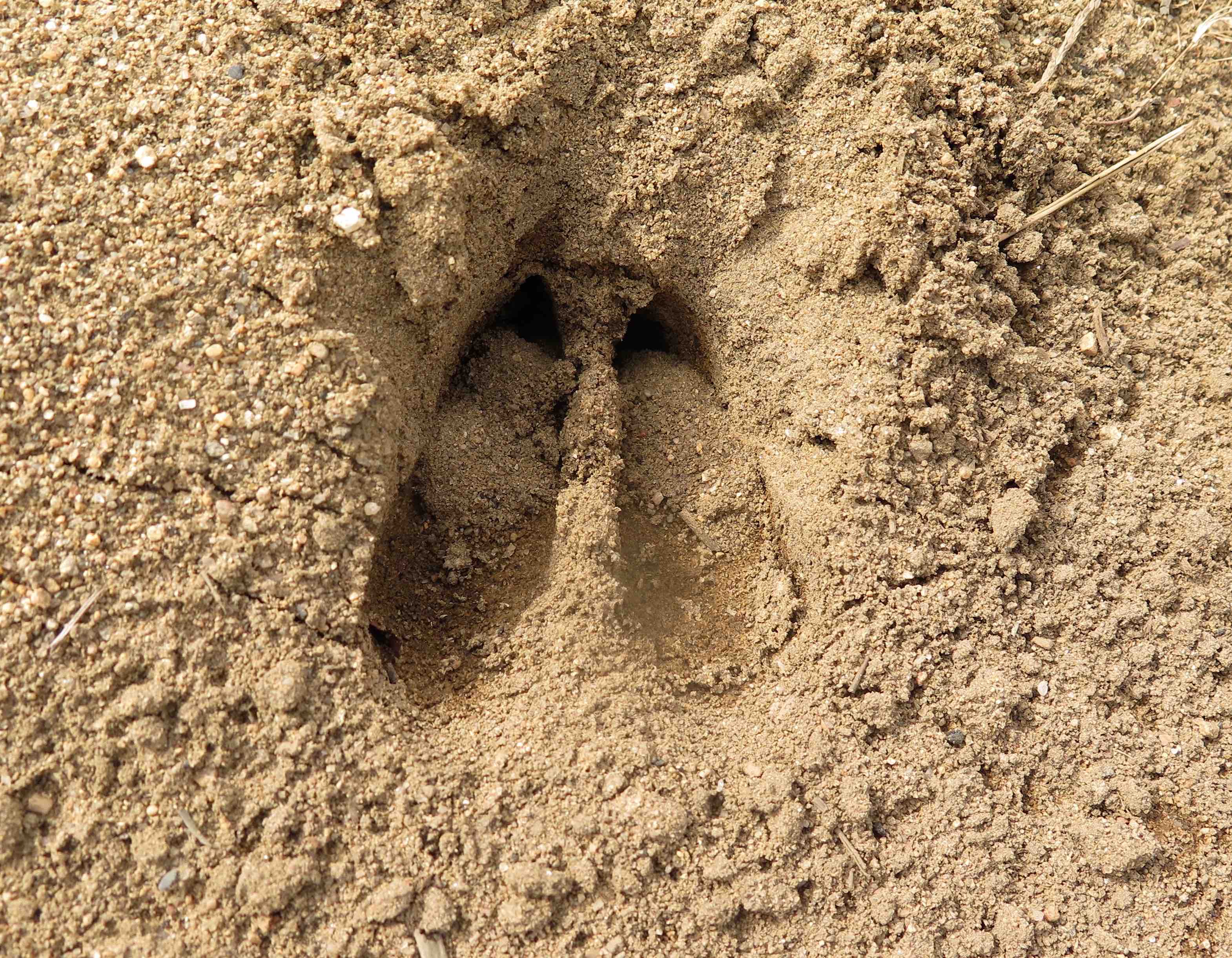
We didn't meet any other human walkers under this powerline, but we did find evidence that wildlife passes here frequently. Probably the most frequent visitors, to judge from the number of deep tracks left in the damp sand and mud, were Whitetail Deer.


We found many canine footprints, too.  Since the canine prints were not accompanied by human tracks (and we also heard many Coyote vocalizations, too), I am going to assert that this is most likely that of a Coyote, not a domestic dog. 


The American Turkey footprints were no surprise, either, since this native wild bird is known to prefer foraging along open roadsides.


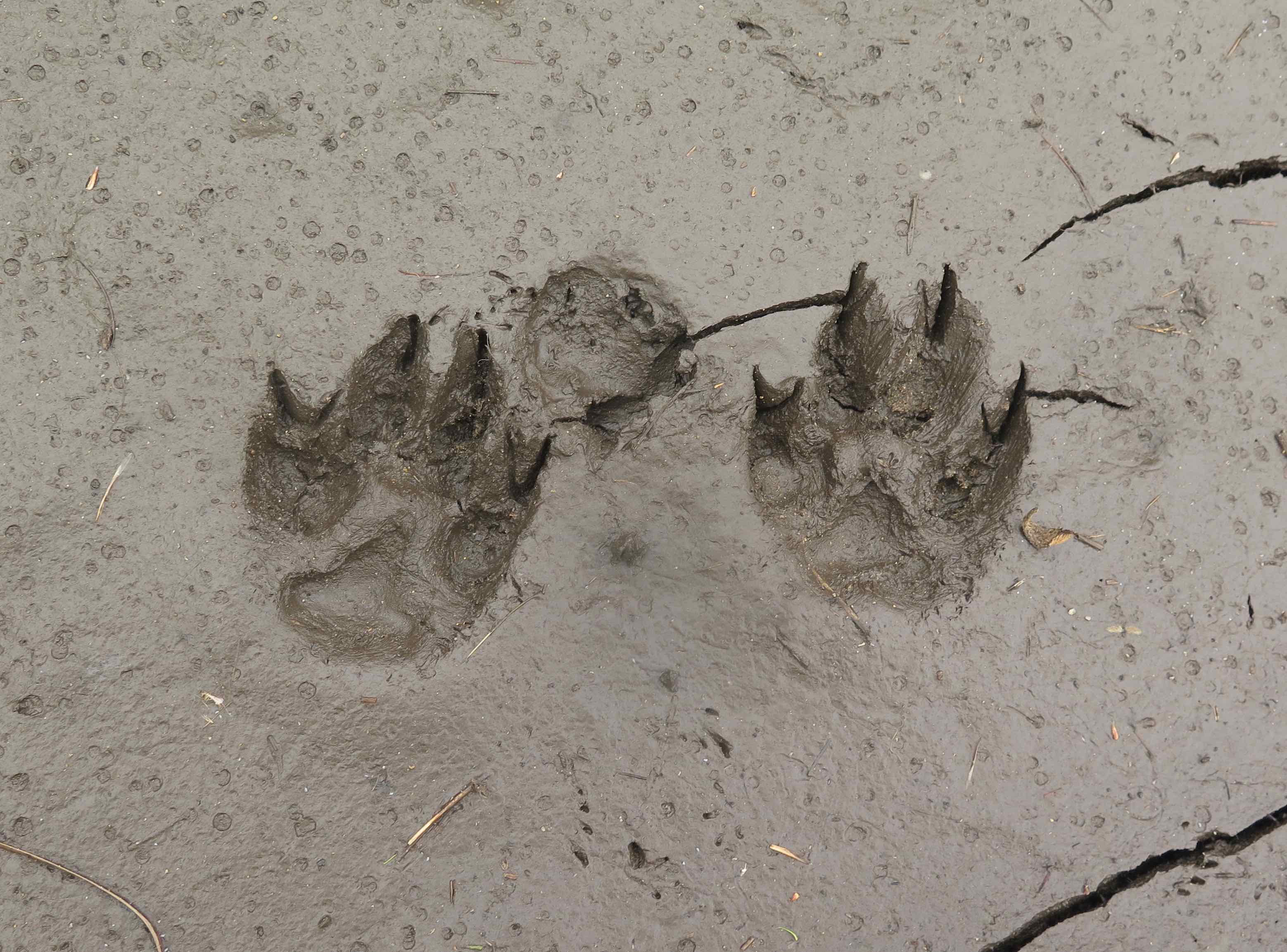
I was surprised, though, to find these tracks.  The size and the slightly curving furry toes projecting sharp nails caused me to think they might be those of a Fisher, a large weasel whose tracks I often find in nearby woods and follow in the snow.  But I am no expert tracker.  Other suggestions would be welcomed. I know that Fishers have five toes, not four, but all my track guides suggest that the small fifth toe often does not show in the track.  
UPDATE: Both Sue and Woody have commented to inform me that these prints are most likely made by a canine species, NOT Fisher, and they give very helpful reasons why in their comments.  Because of the size (smaller than other canine prints that were most likely Coyote), I will assume they were made by a fox, but whether Red Fox or Gray Fox I still would not know.  Since there were no accompanying human footprints, I am assuming they were not domestic dog.


When we came to a crossroads, we observed that we could continue on and on and on, in several directions.  Wow!  Lots more clearcut to explore!  Considering all the interesting things we encountered today, you can be certain we will be back again, to wander even further along these trails.


Tuesday, October 4, 2022

Some Thoughts After Rain

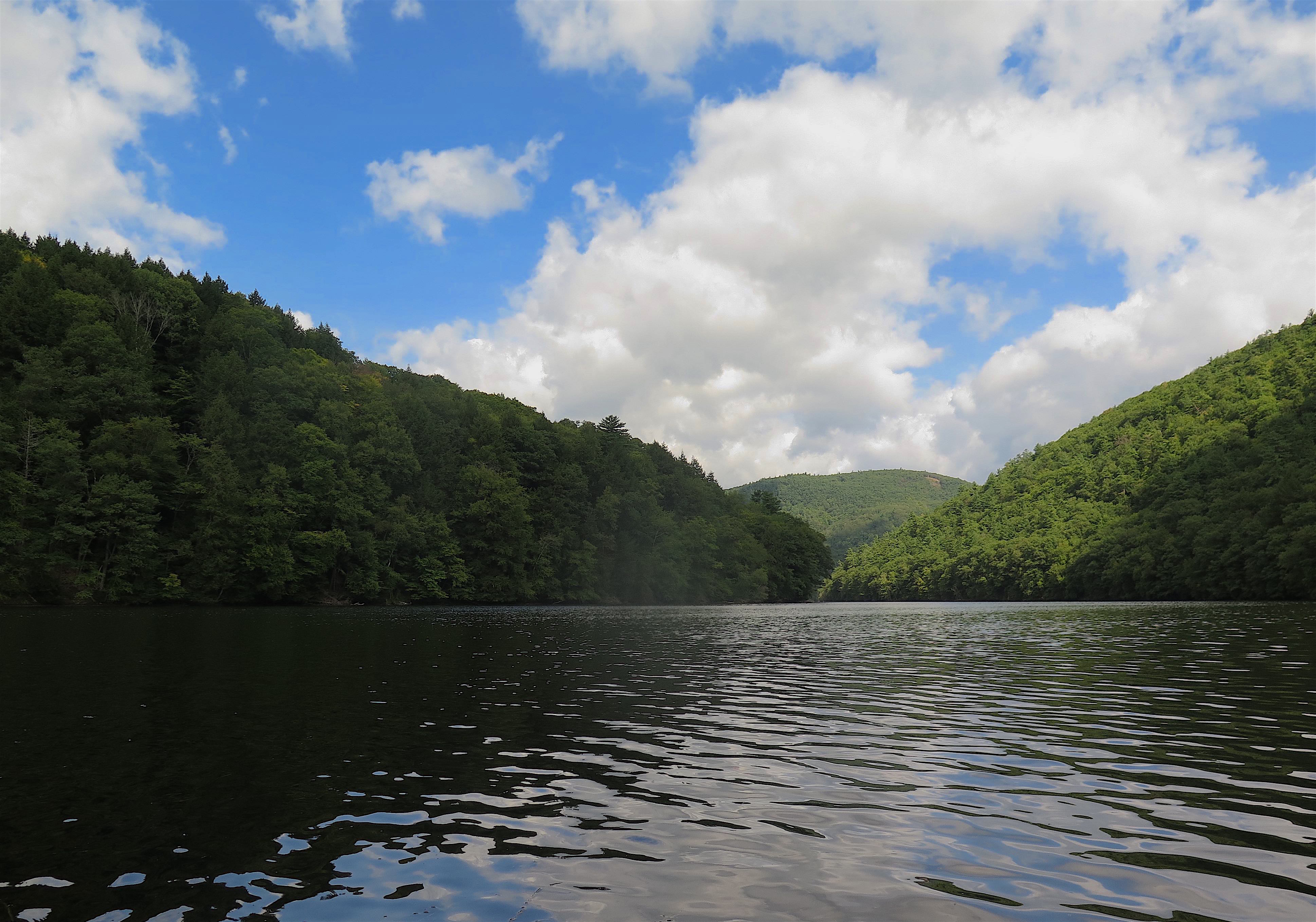
These photos showed up in my Facebook Memories yesterday, reminding me of a rainy day on a beautiful stretch of the Hudson River at Moreau, taken almost exactly one year ago. I had come here to paddle, but before I set off, I stood and gazed at the river, feeling blessed to live in such a beautiful and seemingly unchanging part of the world. A gentle rain fell straight from the sky. An ethereal mist rose among the forested mountains along the shore. 


The rain soon eased, then stopped, although drops still fell from overhanging trees.  Circular ripples danced on the silvery surface of the river.


The river soon calmed to a mirror-like stillness.


Gratefulness filled my being and spilled from my eyes as tears of joy. How blessed I felt to live where nature's beauty surrounds me every day.
  

What a contrast between these serenely beautiful scenes of nature at its most peaceful and what I beheld on the news this week:  horrific images of surging seawaters and raging winds demolishing whole communities along America's coasts and in the Caribbean.  My tears today are of sadness for those who are suffering terribly from nature's ravages.  And not just for those so deeply damaged by Hurricane Ian, but also for people  -- and animals! -- all over the world whose lives have been and will be changed forever by the storms and droughts and wildfires and sea-rise made ever more horrendous by the effects of climate change.  I may live now where those effects are less immediately evident, but it's becoming more and more obvious that those effects are real and growing worse. When will we demand that our political leaders address this issue with the seriousness it requires?

Thursday, September 22, 2022

Twenty Yards of Riverside Wonders. And More.

We had some beautiful weather last week, and my friend Ruth and I arranged to meet at the Sherman Island Boat Launch to enjoy a paddle on the Hudson River.  Our only dilemma was, "Should we paddle upstream or down today?" The forested mountains fall right down to the water along this catchment between the Spier Falls and Sherman Island dams, offering beautiful unspoiled vistas in either direction.  Also, botanical wonders await us plant enthusiasts whether we paddle upstream or down, on the Saratoga County side or over along the Warren County banks. Ultimately, we chose the Saratoga banks and the downstream route, mostly because this steeper and more boulder-lined shore offered more rocky nooks and crannies for lots of mosses and liverworts to thrive in.  Ruth has a special interest in bryophytes, and I am an eager student.

Well, we hadn't ventured more than twenty yards downstream when I remembered, "Oops!  I left my lunch bag in my car!"   So we beached our canoes right there (the river was low, providing a broad sandy landing spot), and I ran back to the parking lot to fetch my food while Ruth lingered there to explore the wooded shore.


And there we remained, for quite a long while.  When I returned, Ruth was already delighted by some of the things she had found at this spot and was searching her nature apps to confirm their names. 


One of those fascinating finds was this pretty moss called Fern Pocket Moss  (Fissidens osmundoides).  A number of reddish-stalked, pointed spore capsules protruded from the clump.  The leaves of this  genus are folded in such a way that a pocket is formed in the leaf, hence the term "pocket moss."  I, of course, cannot detect this pocket with my poor eyesight, but Ruth has lent me her loupe on other occasions so that I could see it. This moss's "ferny-ness" is obvious to even my impaired and unaided eye.


Here's the first fascinating thing I'd found when I stepped from my canoe, the underwater branching structures of some (unknown-to-me) species of bladderwort (Utricularia sp.) sprawling on the damp sand.  Still attached were the tiny bladders that trap and digest even tinier underwater organisms that provide for the plant's nutrition. This bladderwort must have been drifting along with the river's current when the water went down rather suddenly, stranding it on the shore.


Those two finds were just the first of many that kept us exploring this limited woodsy wetland so close to our launch site for quite a while longer. This tall plant of Water Hemlock (Cicuta maculata) stood noticeably above the surrounding vegetation, its reddish stems and coloring leaves inviting our notice.


Thankfully, the Water Hemlock's divided leaves distinguish it from the very similar Water Parsnip, so as to prevent mistaking the two. All parts of Water Hemlock are deadly poisonous to consume, at least for humans. The leaves were certainly pretty, though.


It always delights me to find a carousel of Canada Lily seedpods (Lilium canadense), especially since the Scarlet Lily Beetle has extirpated so many of this beautiful native wildflower's local populations. I was happy to be reminded of the beautiful bright-orange lilies I had seen dangling from these stems at this very location last July.


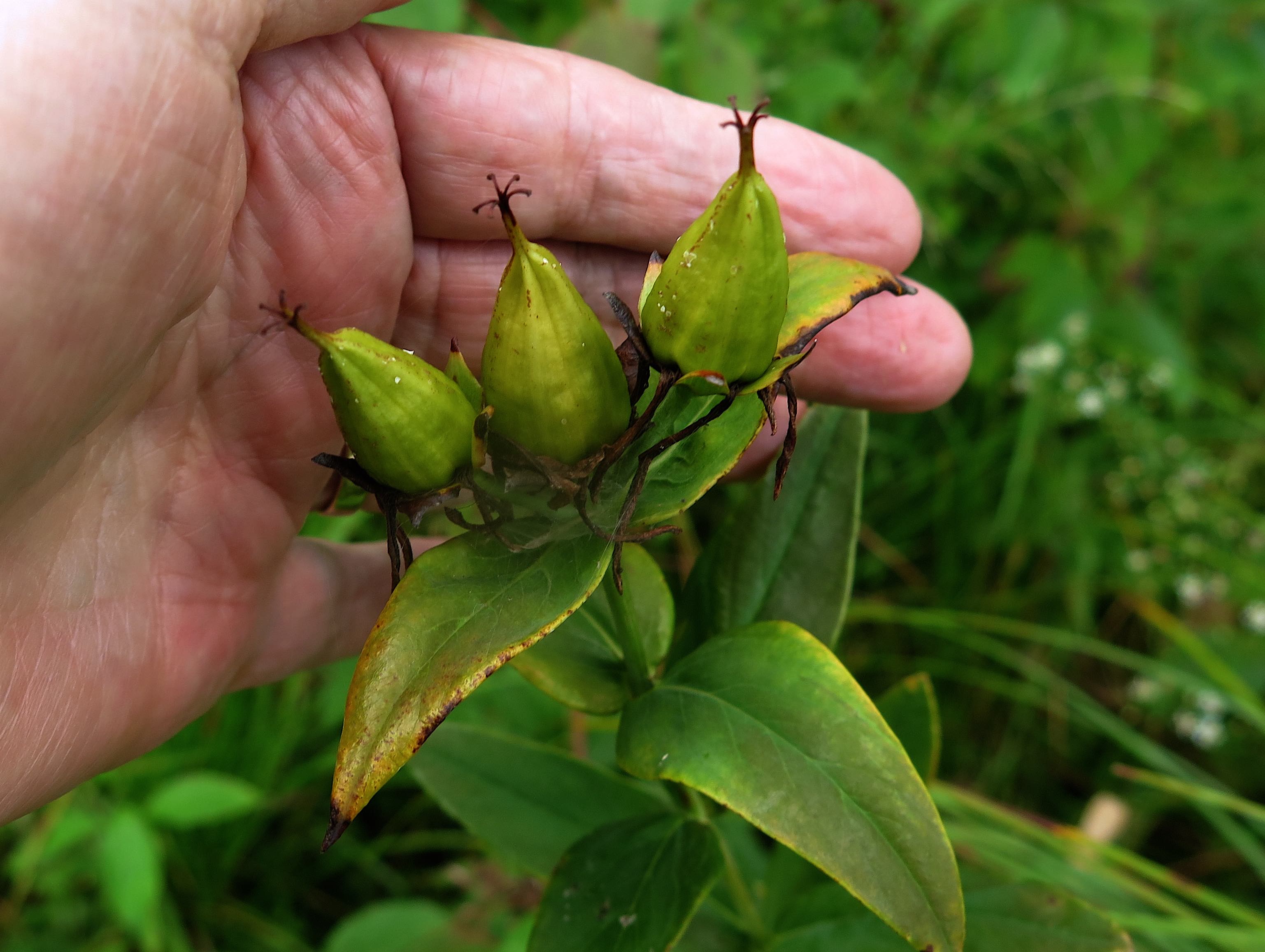
And here, too, were the big fat seed pods of Great St. John's Wort (Hypericum ascyron ssp. pyramidatum),  a native plant with large beautiful flowers that is rated as a Rare species in New York. Happily, I know of several populations, most of them along this very stretch of the Hudson River.


The large white flowers of Common Arrowhead (Sagittaria latifolia) that bloomed here a few weeks earlier had now yielded these attractive green seedpods, perfectly round and beaded with white-striped scales.


I was amused by the spiky pods of a Bur Reed species, resembling a bunch of vegetable hedgehogs.


We did find a few flowers that were still in bloom, too.  In the shallow water near the bank, a number of the white flowers of Grass-leaved Arrowhead (Sagittaria graminifolia) were still attracting their regular cohort of small black pollen-eating flies.


Several plants of Closed Gentian (Gentiana clausa) were blooming here, too, their stems bent over by the weight of multi-bloom flowerheads.


This Heal-all plant (Prunella vulgaris) probably would have remained hidden among the surrounding greenery if not for the brilliant purple of its small florets. Folklore once held that this very common Mint-family herb, native to northern regions of several continents including ours, was sent by God to heal any ailment of man or beast. I won't attest to that, except to admit that the beauty of this pretty flower would be a sight for sore eyes.


Look what else we found at this most interesting patch of riverside woods:  a Spotted Alder branch that held several tufts of white furry stuff.


A closer look revealed that this "fur" was really the white waxy substance excreted by a mass of wingless Woolly Alder Aphids.  The aphids produce this fur-like coating to protect themselves against the weather (and would-be predators, as well) as they spend the rest of their lives in place, feeding on alder sap.


Here was less-furry group of the aphids, perhaps later arrivals produced via parthenogenesis when their solitary winged mother landed here and "gave birth to" the first wingless clone of herself.  That clone produced another clone, that produced another clone, etc., etc., etc., ultimately creating this entire mass consisting of female clones of that first winged Woolly Alder Aphid that landed on this branch.  Before winter arrives, these wingless individuals will produce a final winged generation of both male and female aphids, capable of flying off to find mates and lay eggs on their second essential tree, a Silver Maple. 

Note how these ants appear to be tending to the aphids.  Like other species of aphid, these Woolly Alder Aphids excrete a fluid called "honeydew" as a waste product, and the ants feed on that fluid, fiercely defending their "flock" by driving off any predators.  I have read that Lacewing larvae, voracious predators of aphids, will avoid the defender-ants' notice by covering themselves with the aphids' woolly "fur" and moving undetected amid the cluster, feeding as they go.  Like wolves in sheep's clothing! Wow!  Nature is so amazing!


After marveling at how much fun we were having on this one small patch of riverbank just a few yards from where we had started,  we agreed we should get in our boats and see what we could find while we ventured downstream.  As we paddled, we were charmed by the royal-blue profusion of many Closed Gentian flowers.


We were happily surprised to find still-blooming stands of bright-yellow Sneezeweed (Helenium autumnale) this late in summer.


As we paddled close to wavelet-watered bedrock, we found many patches of this lichen called Streamside Stippleback (Dermatocarpos luridum), looking beautifully plump and green. When not watered regularly by splashing water, this lichen resembles a patch of black crumbly stuff.


For the rest of our trip, fungal beauty replaced the floral.  I couldn't get close enough to this group of golden mushrooms to identify them, so I simply admired their glowing color, mossy green setting, and symmetrical grouping from the seat of my canoe below their high bank.


This stark-white Amanita was beautifully arrayed against the dark shadows of the forested bank.


A decomposing tree trunk provided a very happy home to this group of attractive mushrooms, their plump yellowish caps speckled with rusty red dots.


I was able to reach out and pick one of this group to examine it more closely.  What a vivid chrome-yellow its flesh and gills were! This unusual combination, of ruddy tops and yellow gills, made this mushroom easy to find in my mushroom guides when I got home.  Tricholomopsis rutilans is the scientific name, and its vernacular name is just wonderful: Plums and Custard! I'll never forget this mushroom's name!


Paddling slowly along, I noticed this small Pale Beauty moth (Campaea perlata) struggling to rise from where it had fallen into the water. I picked it up, intending to let it rest on my hand until it was able to fly away.  But instead, it died, or certainly seemed to, since it moved no more.


Ah yes, it's that time of year, when many creatures have accomplished what they lived for and have come to the end of their single-summer lifetimes. I felt a bit sad, but I also hoped that my hand had allowed this ephemeral creature to more peacefully rest into death. 

As I raised my eyes, I was struck by the vivid beauty of Virginia Creeper leaves also "resting into death" as their soon-to-go-dormant vine will no longer require their photosynthesizing green.  The leaves will fall, but the vine will live on, to revive after winter's restorative sleep. I find such rhythms in nature quite reassuring, and even instructive.  Especially now that I am old and contemplate my own passing.